

How adult day programs help delay a full-time care move
By Matthew De Vries · Updated 2026-07-16
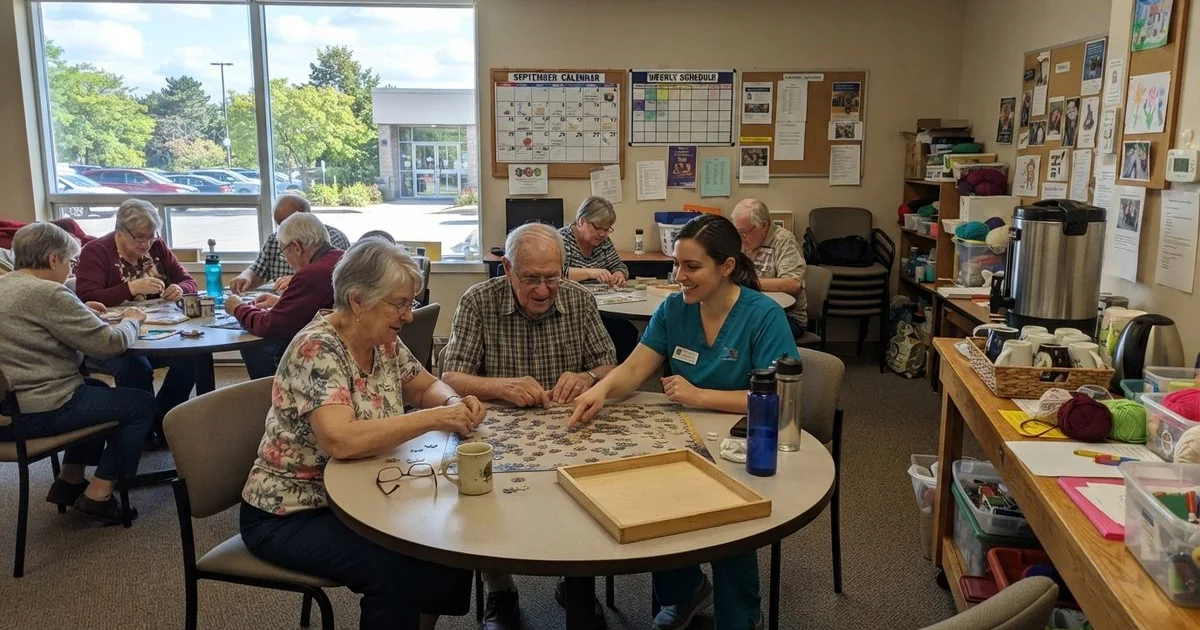
Adult day programs are one of the most underused tools for keeping a senior safely at home longer, mostly because families don’t think of them until they’re already deep into caregiver exhaustion. Used earlier and more deliberately, they can genuinely delay, sometimes by years, the point where full-time residential care becomes necessary.
What a day program actually does
A day program gives an older adult a structured, supervised environment for part of the day, usually with meals, group activities, cognitive stimulation, and some level of health monitoring from staff. For families, the immediate benefit is predictable relief: a caregiver gets hours back to work, run errands, or simply rest, while their loved one stays engaged rather than isolated at home. The less obvious benefit is that regular engagement and structure can help slow functional and cognitive decline compared to long stretches of unstructured time alone.
Why it delays a bigger move
Full-time care, whether that’s a retirement home or long-term care, often becomes necessary less because of a single medical event and more because caregiver capacity runs out. A day program directly addresses that by spreading the caregiving load across the week rather than putting it all on one person around the clock. A caregiver using a program two or three days a week can often sustain home caregiving considerably longer than one managing every day without any structured break.
Matching the program to the need
| Situation | What to look for |
|---|---|
| General social engagement, minimal medical needs | A social or recreation-focused program |
| Dementia with wandering or behavioural needs | A program with secured space and dementia-trained staff |
| More complex medical needs | A medical day program with nursing on site |
| No transportation available | A program offering pickup and drop-off service |
London has 32 providers offering some version of this kind of program, and they differ meaningfully in specialization, so it’s worth being specific about your loved one’s needs rather than choosing based on proximity alone.
What to expect on a first visit
Most programs start with an intake assessment covering mobility, cognitive status, current medications, and any behavioural considerations, followed by a trial day or two to see how the participant adjusts. Staff typically ask about dietary restrictions, emergency contacts, and any specific triggers or preferences worth knowing before the first full day.
Judging whether a program is a good fit
Ask about staff-to-participant ratios, how staff are trained for dementia or fall-risk situations, and whether activities are genuinely varied or repetitive from day to day. A program that communicates with family daily, whether through a logbook, an app, or a phone call, rather than only reporting problems after the fact, tends to be a stronger sign of quality than the facility’s appearance alone.
The cost picture
Adult day program pricing is typically structured as a daily rate, which varies depending on whether the program is general social and recreation-focused or a medical day program with nursing on site, and whether transportation is included. This daily-rate structure tends to make day programs considerably less expensive per hour of coverage than hiring an in-home caregiver for the same block of time, which is part of why they’re worth considering even for families who assume they can’t afford additional support.
Building it into a longer-term plan
Rather than waiting until a caregiver is at a breaking point, many families find it works better to start a day program early, even just one or two days a week, and increase attendance gradually as needs grow. This spreads the adjustment over time and gives both the participant and the caregiver a chance to settle into a sustainable rhythm well before a crisis forces a bigger decision.
Our category page for adult day programs lists local providers in London, and our methodology explains how we score them on staff qualifications, activity variety, and family feedback. Our home page covers the full range of aged care options if a day program turns out not to be enough.
For a lot of families, a day program ends up being the piece that makes staying at home realistic for years longer than it otherwise would have been, simply by giving both the participant and the caregiver a healthier rhythm to the week.
FAQ
- Are adult day programs only for people with dementia?
- No. Many programs serve a mix of seniors, some managing dementia, others recovering from a health event, and some simply looking for structured social engagement and supervision during the day.
- How many days a week do families typically use a program?
- It varies widely. Some start with one or two days a week and increase as caregiving demands grow, or as a doctor recommends more structured daytime support.
- What happens on a first visit?
- Expect an intake assessment covering mobility, cognitive status, medications, and any behavioural considerations, often followed by a trial day so both the participant and staff can adjust.
- Can transportation be arranged?
- Many programs offer pickup and drop-off service for an additional fee, which is worth asking about upfront if the participant can no longer drive or a caregiver can't manage daily transport.