

Signs it's time for memory care: a family's decision guide
By Matthew De Vries · Updated 2026-06-30
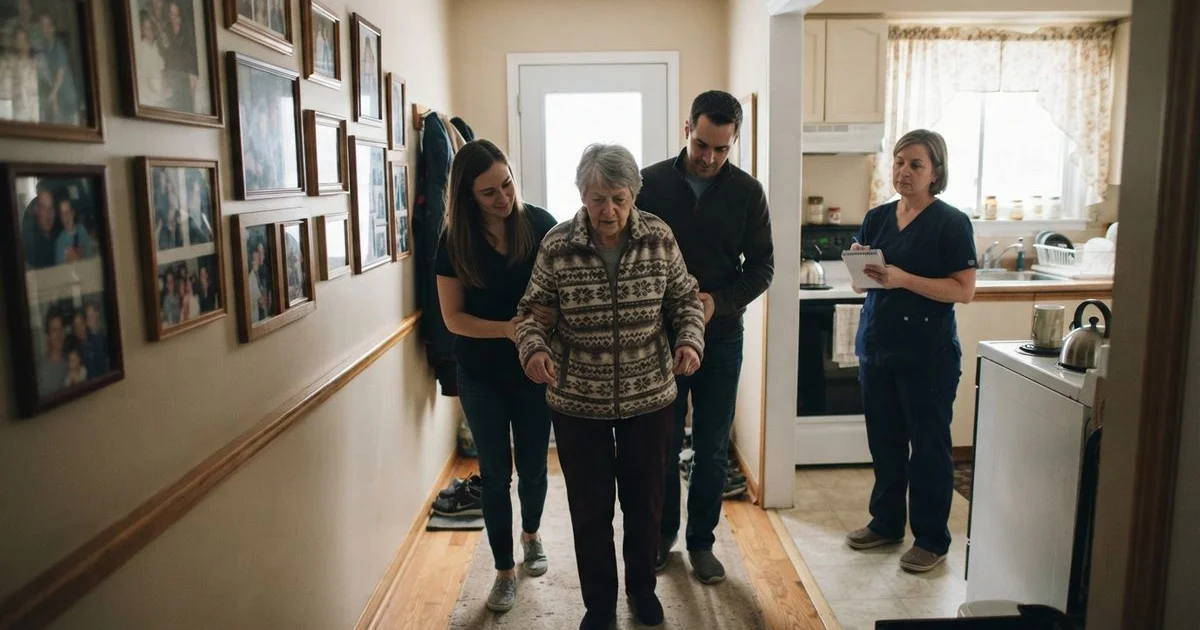
Deciding it’s time for memory care is rarely a single moment. It’s usually a gradual recognition that home support, however well organized, can’t keep pace with what dementia is demanding of a family. Knowing the signs that genuinely point toward memory care, rather than waiting for a crisis to force the decision, gives families far more control over the process.
When home support stops being enough
Home care and family caregiving can manage a lot of dementia symptoms for a long time. What tends to signal a real shift is safety, not just difficulty. Wandering out of the house, especially at night or in cold weather, is one of the clearest signals, since it introduces a risk that supervision at home can’t fully eliminate. Aggression toward a caregiver or family member, even if it’s confusion-driven rather than intentional, is another sign that the current environment isn’t matching the person’s needs anymore.
Signs worth paying attention to
- Wandering, especially leaving the home unsupervised or getting lost in familiar places
- Aggression or agitation that’s escalating rather than occasional
- Falls linked to confusion or disorientation, particularly at night
- A caregiver who is exhausted, unwell, or unable to keep up with supervision demands
- Repeated safety incidents: stove left on, wandering outside, unsafe wandering into traffic
- Sundowning behaviour that’s become severe or unmanageable in the evening hours
One or two of these might be manageable with adjusted home support. Several together, especially safety incidents, usually point toward a level of supervision that a secured memory care environment provides more reliably.
What actually distinguishes memory care
| Home care with dementia support | Memory care unit |
|---|---|
| Caregiver present for scheduled hours only | Staff on site around the clock |
| No secured environment; wandering risk depends on the home | Secured entrances designed to prevent unsafe wandering |
| Family typically coordinates and covers gaps | Structured routines and trained staff manage transitions and behaviour |
| Works well for earlier-stage or lower-risk situations | Built for higher-acuity behavioural and safety needs |
What the transition usually looks like
Once a family decides memory care is the right next step, the process typically starts with a tour and an assessment by the home to confirm the level of supervision needed matches what a secured memory care unit provides. Many homes recommend bringing familiar items, photos, a favourite chair, a specific blanket, since a familiar physical environment can meaningfully ease the adjustment for someone with dementia. The first weeks often involve some resistance or confusion as routines change, which is common and usually settles as staff learn the person’s preferences and patterns.
Cost is a real part of this decision too. Memory care support carries a premium over standard retirement living or basic long-term care, reflecting the higher staffing and specialized training involved, so it’s worth getting a clear, written cost breakdown from any home under consideration before committing.
Making the decision without guilt
Many families describe this decision as one of the hardest they’ve made, often tangled up with guilt about “giving up” on a parent. It helps to reframe it: a secured, staffed environment isn’t a lesser option, it’s often the safer one, and it can mean more genuine engagement and quality time with a parent instead of every visit being consumed by supervision and worry.
If the situation becomes urgent
Sometimes the shift happens fast rather than gradually, a bad fall, a dangerous wandering incident, or aggression that puts someone at risk. In those cases, a crisis designation through Home and Community Care Support Services can move placement ahead of the standard process. It’s worth knowing this option exists before you need it.
Our category page for memory care and dementia care lists local providers in London, and our methodology explains how we evaluate them on staff training, safety, and family sentiment. Our home page is a good starting point if you’re still weighing memory care against continued home support.
Whatever the timeline turns out to be, starting to tour and research homes before you feel ready gives you options rather than forcing a rushed decision when a bed becomes available. Families who’ve been through it often say the research phase, done calmly and in advance, made the actual transition far less overwhelming than they expected.
FAQ
- Is memory care the same as a regular retirement home?
- No. Memory care units have secured entrances to prevent unsafe wandering, staff trained specifically in dementia behaviours, and a physical layout designed to reduce confusion, which standard retirement living doesn't provide.
- What if my parent refuses to consider it?
- This is common, especially in earlier stages of dementia when insight into their own decline is limited. Framing it around safety and staying engaged, rather than as a loss of independence, tends to land better than a direct confrontation.
- Can home care handle dementia instead?
- Sometimes, for a while. It depends heavily on wandering risk, aggression, and how much supervision is realistically needed, since home care can't provide the same round-the-clock secured environment a memory care unit does.
- Is there a way to get in faster if the situation becomes unsafe?
- Yes. A crisis designation can be requested through Home and Community Care Support Services when safety is at immediate risk, which can prioritize placement over the standard waiting process.