

What to expect during a home care assessment in London, Ontario
By Matthew De Vries · Updated 2026-06-26
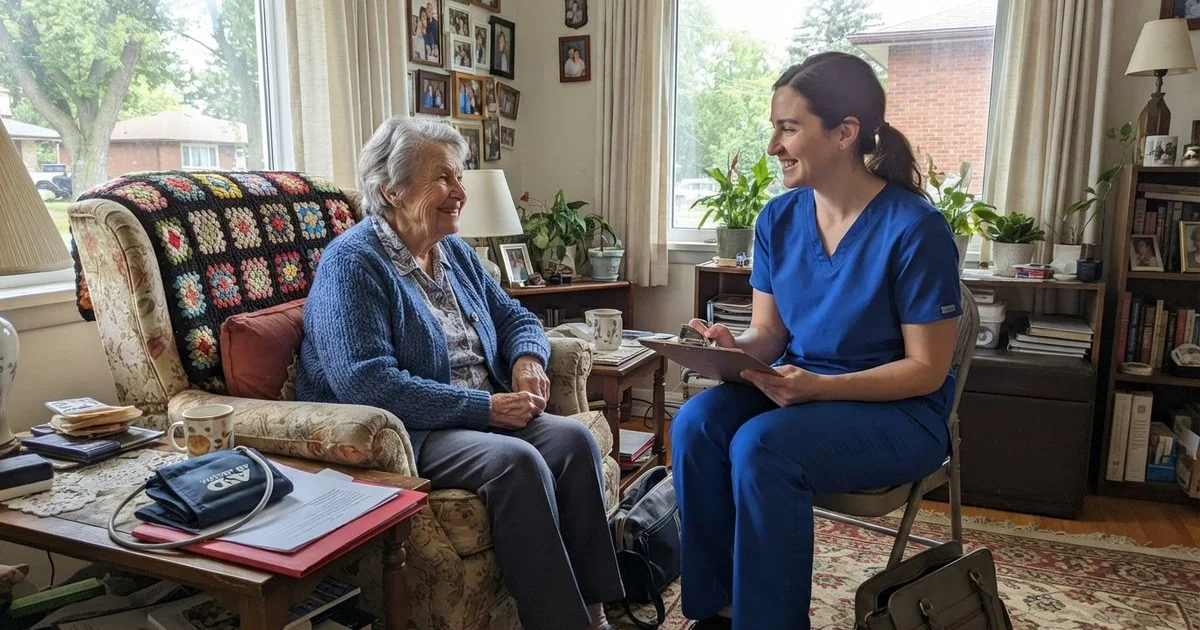
Before a caregiver ever shows up for a first shift, a proper home care agency in London will send a coordinator or nurse to do an in-home assessment. This step gets skipped by agencies looking to place a caregiver quickly, which is itself a warning sign worth noticing. Knowing what a thorough assessment actually looks like helps you tell a careful agency from a rushed one.
The first phone call
The process usually starts with a phone conversation covering the basics: who needs care, what’s prompting the search now, roughly what kind of help is needed, and any urgent timing. This call is also when the agency gives a rough hourly rate range, though it’s an estimate rather than a firm quote until the in-home assessment happens.
The in-home assessment visit
A coordinator or nurse visits the home, ideally with the person who will receive care present, and evaluates several areas directly rather than relying on a family’s secondhand description:
- Mobility, including how someone gets in and out of a chair, bed, or the bathtub
- Medication management, whether pills are taken correctly and on schedule
- Cognitive status, including memory and any confusion or disorientation
- Safety hazards around the home, like loose rugs, poor lighting, or stairs without railings
- What the person already manages independently versus where they’re struggling
A good assessor asks the person directly about their own preferences and routines, not just the family’s account of the situation, since the two don’t always match.
What you should walk away with
| Deliverable | What it should include |
|---|---|
| A written care plan | Specific tasks, frequency, and the level of support agreed on |
| An estimated schedule | Days and hours of coverage, and how it can flex if needs change |
| Clear pricing | The confirmed hourly rate for the assessed level of care, not just a phone estimate |
| A point of contact | Who to call for scheduling changes, concerns, or emergencies |
If an agency skips the written plan or pricing breakdown and just books a caregiver for a start date, that’s worth questioning directly.
Documents worth having ready
Having a few things prepared before the assessment speeds things up and leads to a more accurate plan: a current medication list, recent hospital discharge paperwork if there’s been a hospital stay, and contact information for the family doctor. It also helps to write down a rough picture of a typical day beforehand, what the person manages on their own, what they avoid or struggle with, and any recent changes, since it’s easy to forget details in the moment when a coordinator is asking questions in person.
Signs the assessment was rushed
Not every assessment is thorough. A few signs suggest an agency may be moving too fast: the visit lasts less than half an hour for a complex situation, the coordinator doesn’t ask about medications or safety hazards directly, or no one asks to speak with the person receiving care on their own for at least part of the conversation. A rushed assessment often leads to a care plan that doesn’t actually match what’s needed, which shows up later as frustration on both sides.
The first few visits
Most families notice an adjustment period as a new caregiver learns routines and builds rapport, especially for someone with dementia or a strong preference for doing things a particular way. It’s reasonable to ask the agency how they handle a caregiver mismatch, since not every pairing works on the first try, and a responsive agency will adjust rather than insist you stick with an assignment that isn’t working.
Reassessing as needs change
A care plan isn’t meant to be permanent. Most agencies reassess every few months, or sooner after a hospital stay, a fall, or a noticeable change in condition. Staying in touch with your coordinator rather than waiting for a scheduled review lets the plan adjust before a mismatch between needs and service becomes a real problem.
Our category page for in-home senior care lists London’s home care providers, and our methodology explains how we evaluate them on responsiveness and consistency. Our home page is a good starting point if you’re still comparing home care against other options.
FAQ
- How long does an assessment visit usually take?
- Most in-home assessments run 45 minutes to an hour, though it can take longer if there are complex medical needs or several family members want to be involved in the conversation.
- Does the person receiving care need to be present?
- Yes, generally. A good assessment involves the person directly, both to evaluate their needs accurately and to make sure the plan reflects what they actually want, not just what family members assume.
- What should I have ready before the assessment?
- A current medication list, recent hospital discharge paperwork if applicable, and a general sense of a typical day, what the person manages alone and where they struggle, all help the assessment go faster and more accurately.
- Can the care plan change after it starts?
- Yes. A reasonable agency will reassess every few months, or sooner if something changes, like a fall, a hospital stay, or a noticeable decline, rather than locking in a plan indefinitely.
Related on this site
- Browse in-home senior care providers
- Best in-home senior care in London, Ontario →
- What drives the cost of in-home senior care in London, Ontario
- Aging in place safely when family lives far away
- Moving a parent into a retirement home: the process, step by step
- How long it takes to get into a long-term care home in Ontario
- All guides →