

What to look for on a tour: red flags in cleanliness, staffing, and communication
By Matthew De Vries · Updated 2026-06-22
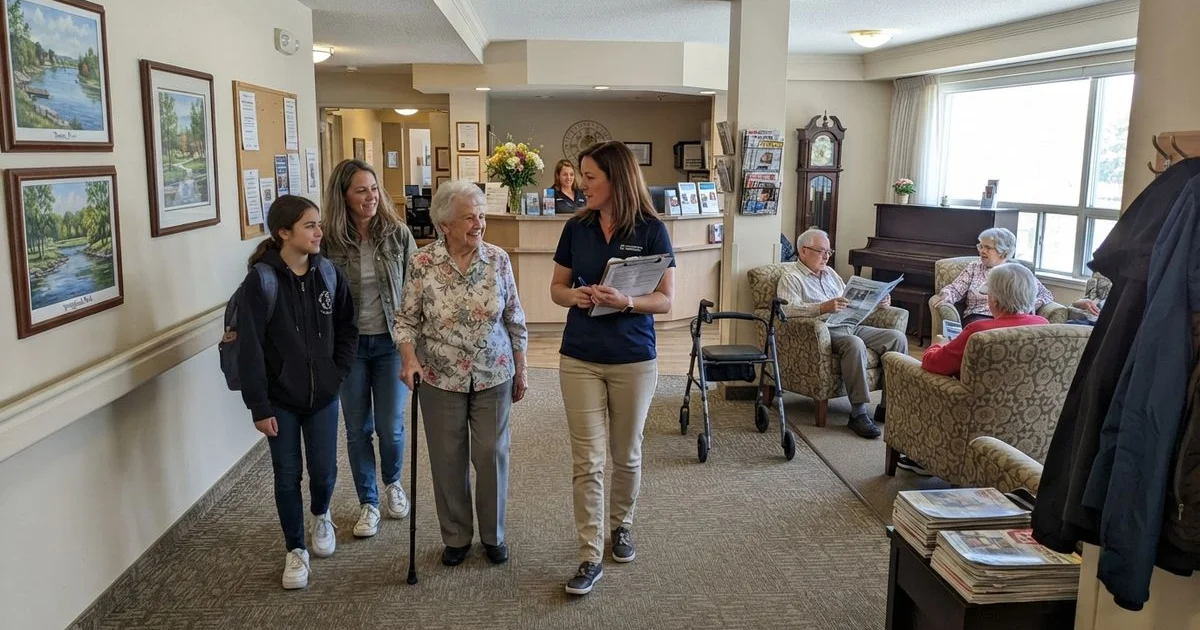
A scheduled tour shows a home at its best. Families who look past the polished walkthrough and ask pointed questions tend to make better decisions, because the issues that actually cause problems after move-in, staffing gaps, slow response times, unclear communication, rarely show up in a standard hour-long visit.
What the tour won’t show you on its own
Recurring family concerns across care homes tend to cluster around a few themes: being understaffed, especially evenings and weekends, slow response to call bells or requests for help, inconsistent communication when a resident’s condition changes, and gaps in cleanliness or maintenance in areas beyond the show suite. None of these are obvious in a 45-minute daytime tour led by an administrator. Ontario’s public inspection reports and resident-rights protections fill some of this gap; the guide to long-term care resident rights and inspection reports covers how to read them before you go.
A practical checklist for your visit
| What to check | Why it matters |
|---|---|
| Ask to see an actual occupied resident room, not just a model suite | Model suites are often nicer than what most residents actually live in |
| Visit during a real meal service, not a staged one | Shows genuine food quality and how residents are actually assisted at mealtime |
| Ask about staff-to-resident ratios on evenings and weekends | This is when families report the most staffing gaps |
| Ask how long current staff have been there | High turnover often correlates with inconsistent care |
| Ask what happens when a resident’s condition changes | A good home has a clear process for notifying and involving family |
| Check stairwells, common bathrooms, and less-visited hallways | Cleanliness in these areas is a better signal than the lobby |
| Ask how complaints are handled and by whom | A home with a clear complaint process tends to resolve issues faster |
Questions worth asking directly
Beyond the checklist, a few direct questions tend to surface useful information: how does the home handle a fall or medical emergency, is there a registered nurse or personal support worker on site around the clock, what’s included in the base rate versus billed as an extra, and how often is a resident’s care plan reviewed and updated. A home that answers these clearly and specifically, rather than vaguely, is usually a good sign in itself.
Reading reviews without over-relying on them
Individual reviews, whether glowing or scathing, are less useful than the pattern across many of them. A single complaint about a rude staff member matters less than repeated mentions of slow response times or unresolved communication issues across multiple families over multiple years. Look for consistency in what people praise and what they raise concerns about, rather than weighting the most recent or most dramatic review too heavily.
Bring someone else along
A second set of eyes catches things one person misses, especially when emotions are running high about a parent’s situation. A sibling, a friend who has been through this before, or even a private care consultant can notice a detail, a smell, a staff interaction, a resident left waiting, that the primary decision-maker might overlook while focused on the bigger picture. Comparing notes after the tour, rather than relying on one person’s impression alone, tends to produce a more balanced read on the home.
After the tour
If something felt off, a second visit at a different time of day, ideally unannounced or at least without a scheduled guide, often tells you more than the first. Evenings and weekends, when staffing is typically lighter, are particularly worth seeing for yourself before committing.
Trusting your gut alongside the checklist
A checklist helps you notice specific things, but pay attention to your overall impression too. Do staff greet residents by name and make eye contact, or move through their tasks without much acknowledgment of the people around them? Does the home feel lived-in and comfortable, or sterile and overly formal? These softer impressions are harder to put into a table, but families who’ve been through this process often say their gut reaction on the day mattered as much as anything on a formal checklist.
Our ranked guide to long-term care homes in London draws on review consistency, recency, and family sentiment using our methodology, which can help narrow your shortlist before you start touring in person. Our home page covers the full range of aged care options in London if you’re still deciding what type of care fits.
FAQ
- Should I tour more than once before deciding?
- Yes, if possible. A second visit at a different time of day, especially evenings or weekends, often shows a different picture than a scheduled weekday tour designed to impress.
- Is it reasonable to ask about staff turnover directly?
- Yes. Ask how long current staff have been there and how shifts are covered when someone calls in sick. Homes with high turnover often struggle with the consistency families notice most.
- What if the home discourages an unannounced visit?
- That's worth noting. Most well-run homes are comfortable with families visiting outside scheduled hours, though it's reasonable to give notice for a formal second tour.
- Are online reviews reliable for judging a home?
- They're useful for spotting patterns across many reviews, especially recurring themes, rather than relying on a single glowing or scathing account.
Related on this site
- Browse long-term care homes providers
- Best long-term care homes in London, Ontario →
- How long it takes to get into a long-term care home in Ontario
- Resident rights in Ontario long-term care homes, and how to use inspection reports
- Coping with dementia behaviors at home: sundowning, wandering, and safety strategies
- Fall prevention for seniors living at home: a practical safety guide
- All guides →